

Picosecond Laser Machine Introduction
Picosecond laser technology has become one of the most advanced solutions for tattoo removal, pigmentation treatment, and skin rejuvenation. Compared with traditional nanosecond lasers, picosecond lasers deliver ultra-short pulses that break pigment into much smaller particles while minimizing heat damage to surrounding tissue.
But how does a picosecond laser actually work? In this guide, we’ll explain the technology behind picosecond lasers, how they remove pigment, and why they have become a popular choice for aesthetic clinics worldwide.
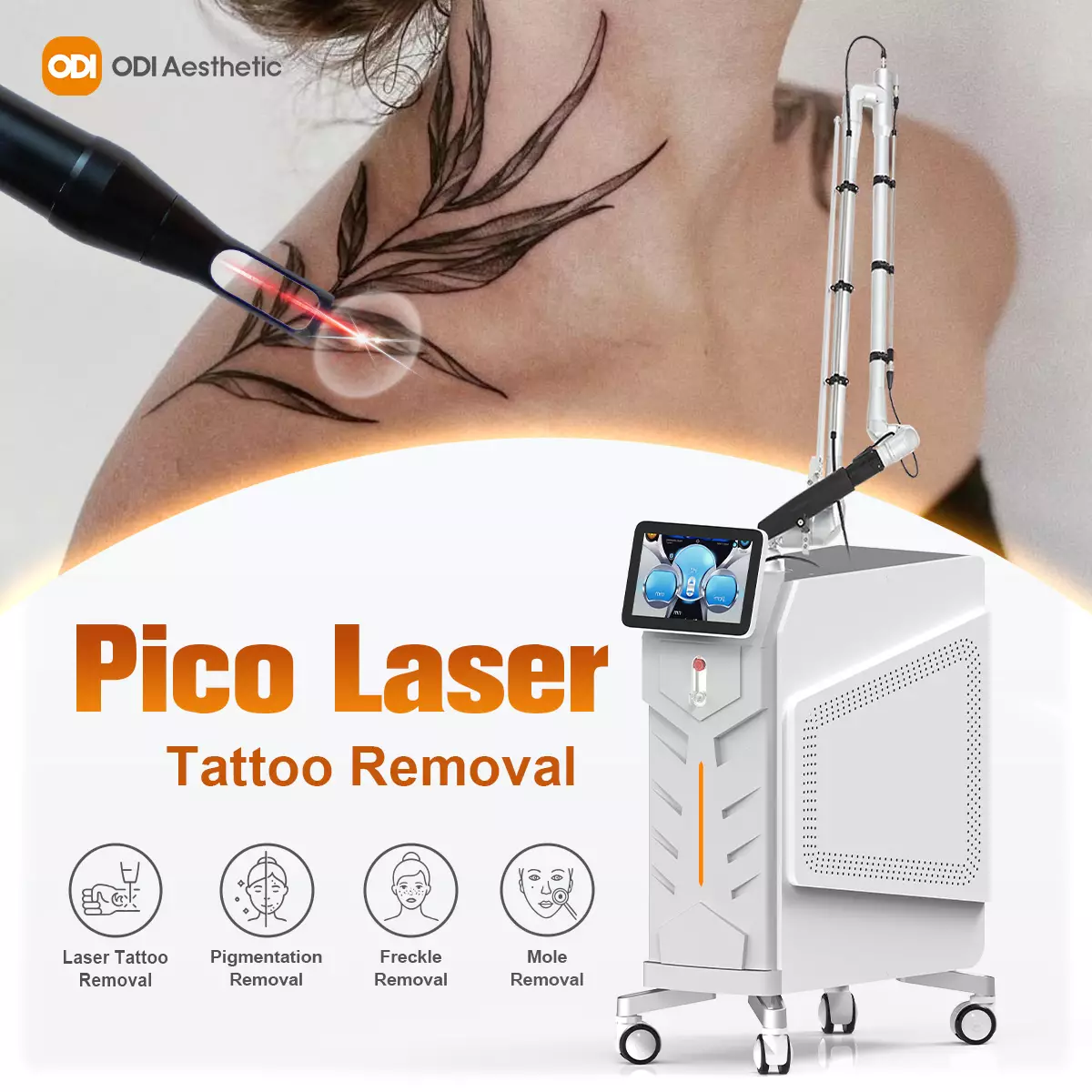
What Is a Picosecond Laser?
A Picosecond Laser is a medical aesthetic laser that emits ultra-short pulses measured in picoseconds (one trillionth of a second). Instead of relying primarily on heat, it uses a strong photoacoustic effect to shatter pigment particles into tiny fragments that the body’s immune system can gradually eliminate.
Because less heat is transferred to surrounding tissue, picosecond lasers offer effective treatments with a lower risk of thermal damage and shorter recovery times.
How Does a Picosecond Laser Work?
A picosecond laser works by delivering ultra-short, high-energy pulses that pass through the skin and are absorbed by pigment particles, such as tattoo ink or excess melanin. The powerful photoacoustic effect shatters these particles into tiny fragments with minimal heat damage. Over the following weeks, the body’s lymphatic and immune systems naturally eliminate the pigment, while the treatment also stimulates collagen production to improve skin texture and overall skin quality.
Core Working Principle: More Than Just “Fast”, It’s “Precise”
What sets picosecond lasers apart lies in the revolutionary mechanism of action.
The Leap from “Thermal” to “Acoustic” Effects
Traditional aesthetic lasers (such as Q-switched lasers) rely primarily on selective photothermolysis-heating the target tissue (like melanin) to fragment it. However, heat inevitably diffuses into surrounding healthy tissue.
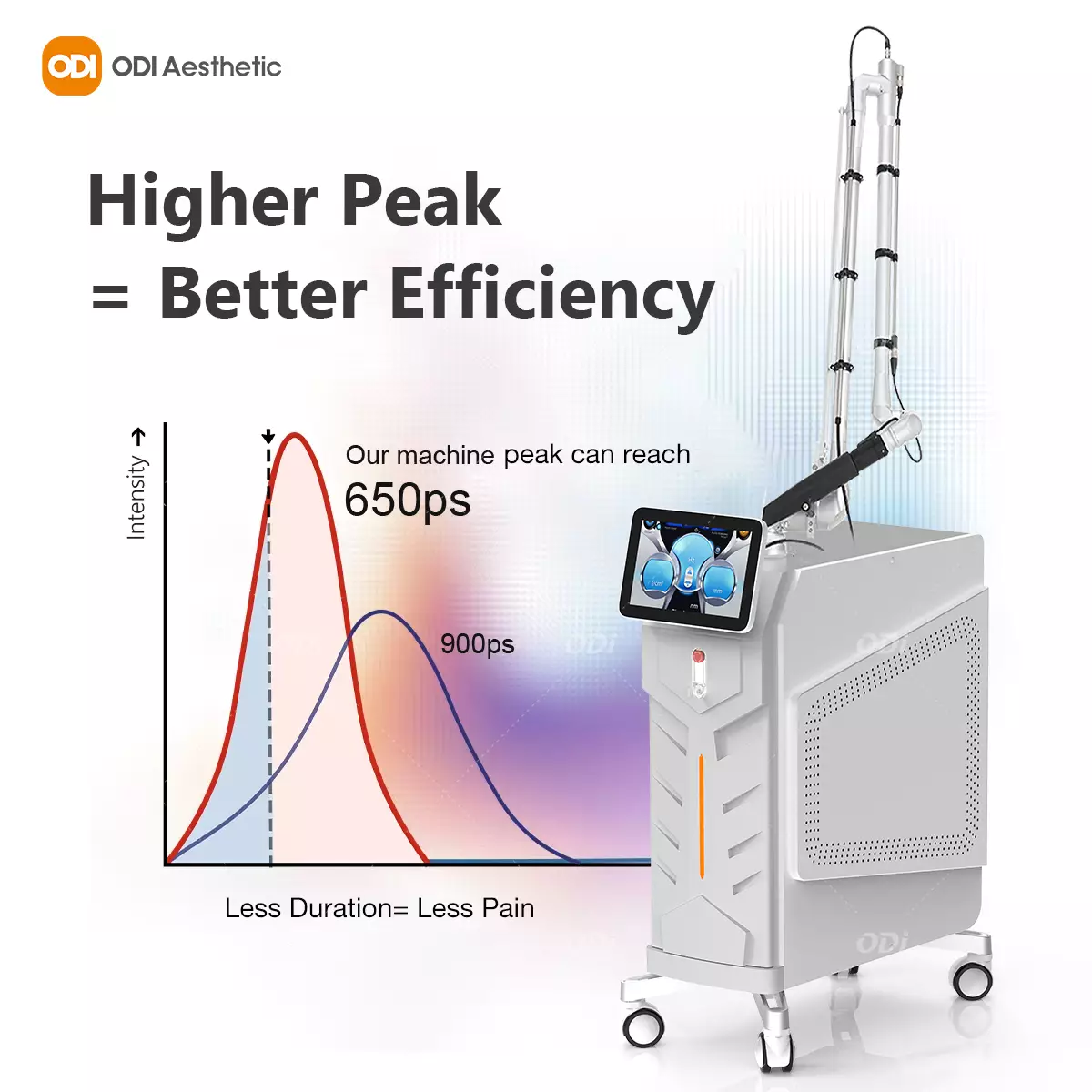
Picosecond lasers are different. Their pulse duration is 1 to 3 orders of magnitude shorter than that of traditional lasers. When energy is absorbed by chromophores (melanin or tattoo ink) in the skin,the dominant effect is photomechanical (or photoacoustic) rather than photothermal.
Here’s an easy analogy:
- Traditional laser (nanosecond) : Like using a hammer to break a rock into smaller stones.
- Picosecond laser (picosecond): Like using a shockwave to shatter the rock directly into fine dust.
This “pulverization” effect produces much smaller pigment particles that are more easily engulfed and cleared by the body’s immune system. At the same time, because minimal heat is generated,there is virtually no damage to surrounding skin tissue. Post-treatment redness, hyperpigmentation, and other adverse reactions are significantly reduced, and downtime is shorter.
The Honeycomb Lens: From “Spot Removal” to “Skin Rejuvenation”
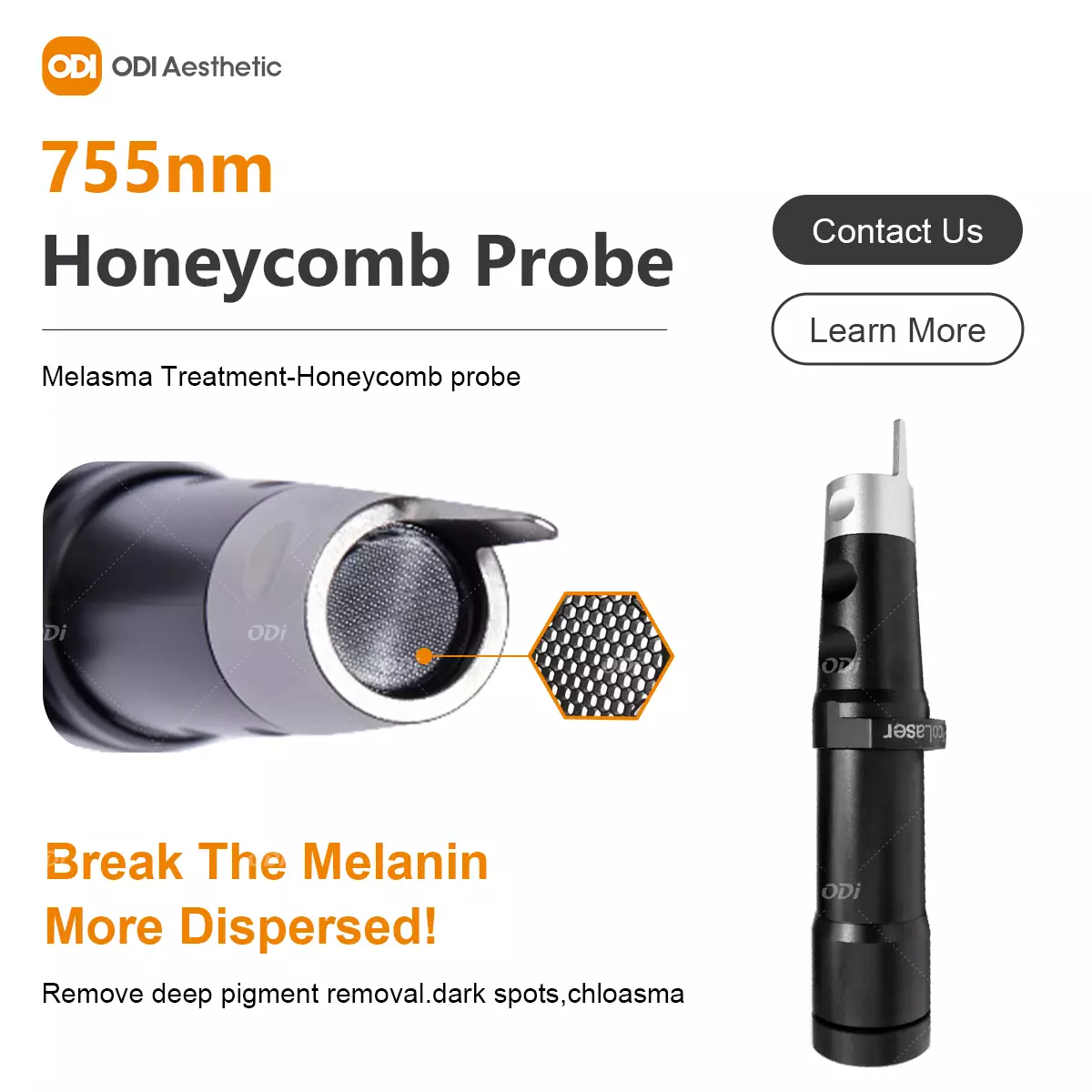
Many advanced picosecond devices (such as ODI laser Picosecond laser machine PX20) are equipped with proprietary technologies like the honeycomb lens (diffractive lens array).
This technology refocuses each laser beam to create extensive, densely distributed laser-induced optical breakdown (LIOB) effects in the skin. It stimulates fibroblast activity in the dermis, promoting new collagen and elastin production. This means picosecond lasers are not just for pigment removal-they can simultaneously deliver skin rejuvenation, tightening, fine line reduction, and improvement in pores and acne scars.
What Skin Concerns Can Picosecond Lasers Address?
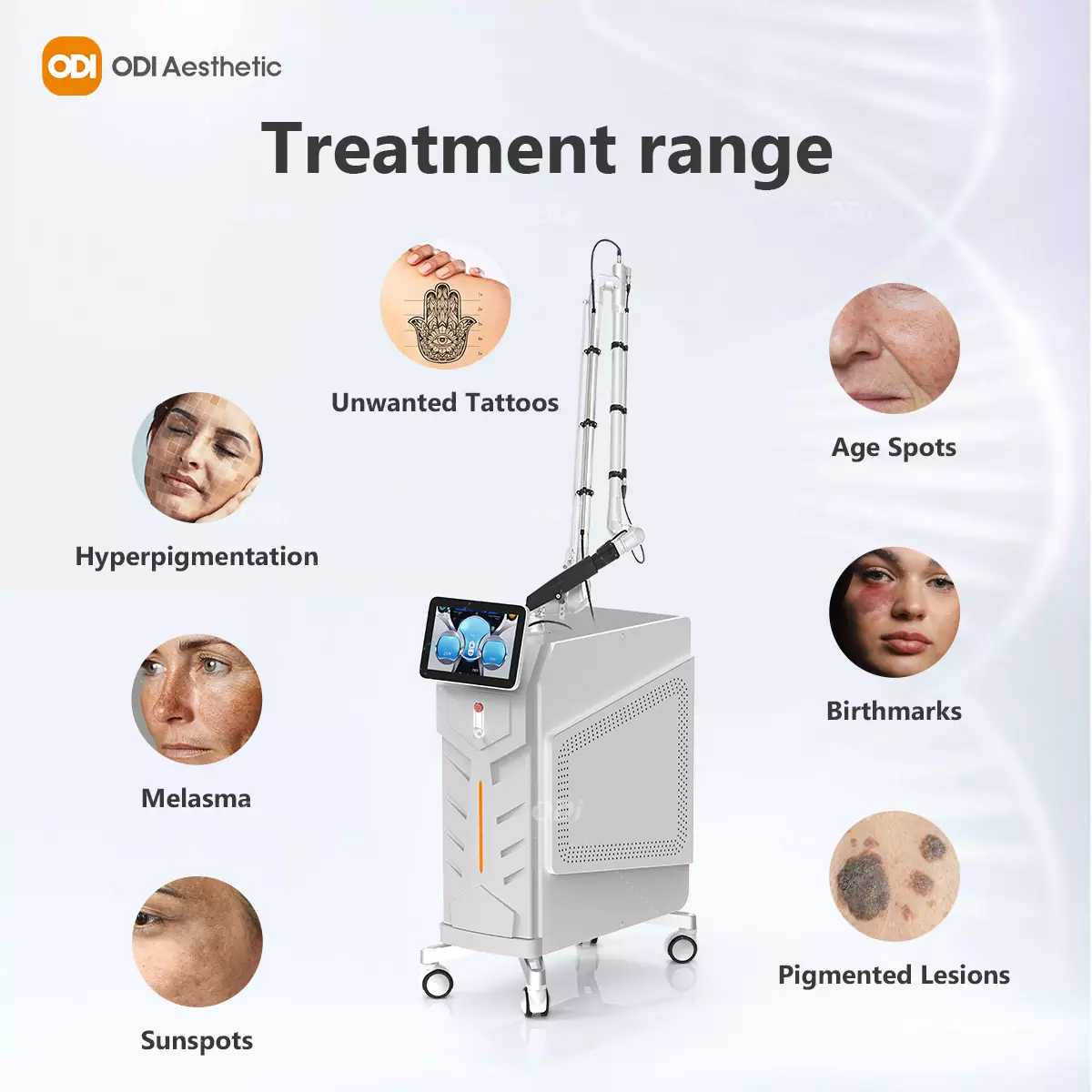
As a versatile aesthetic device platform, picosecond lasers excel in the following areas:
Pigmented Lesions (Various Types of Spots and Freckles)
Picosecond lasers deliver precise treatment for freckles, sunspots, cafe-au-lait spots, Ota nevus,Hor’s nevus, and even stubborn melasma. Particularly for refractory pigmentation that responds poorly to traditional Q-switched lasers, picosecond lasers often achieve breakthrough improvements. It is currently the only picosecond device platform with FDA clearance for treating melasma, Ota nevus, and Hori’s nevus.
Tattoo Removal Laser
Picosecond lasers were initially developed to optimize tattoo removal outcomes. They are highly effective on black, blue, and green dark inks; when combined with different wavelengths (such as532nm), they can effectively remove red, yellow, and orange “warm-toned” inks that are difficult for traditional lasers to address. Compared with conventional lasers, fewer treatment sessions are required, with less damage to the skin.
Skin Rejuvenation and Scar Revision
Through honeycomb lens fractional modes, picosecond lasers effectively improve photoaging(wrinkles, dull skin tone), acne scars, and enlarged pores. Clinical studies show that they canachieve results comparable to traditional fractional lasers while delivering lower pain levels and shorter downtime.
Why Choose Picosecond Laser? Key Advantages at a Glance
| Feature | Traditional Q-Switched Laser(Nanosecond) | Picosecond Laser |
| Mechanism of Action | Photothermal (thermal effect) | Photomechanical /Photoacoustic(shockwave) |
| Pigment Fragmentation | Coarser particles (like gravel) | Extremely fine particles (like dust) |
| Damage to SurroundingTissue | Higher (thermal damage risk) | Minimal (negligible heat diffusion) |
| Number of Sessions | More | Typically fewer |
| Downtime & Comfort | Longer erythema period, relatively more pain | Shorter downtime, milder discomfort |
Compared with nanosecond lasers, picosecond pulses:
- Deliver energy more precisely
- Break pigment into smaller particles
- Reduce heat damage
- Improve treatment efficiency
- Shorten recovery time
These benefits make picosecond lasers a preferred option for many aesthetic professionals. More details can you click here: Picosecond Laser VS Q-Switched Nd:YAG Laser: what’s the difference?
Why Many Aesthetic Clinics Choose Pico Laser Technology
As demand for minimally invasive aesthetic treatments continues to grow, clinics are increasingly investing in picosecond laser systems.
Key advantages include:
- Faster tattoo removal
- Effective pigmentation treatment
- Skin rejuvenation benefits
- Shorter recovery time
- Higher patient satisfaction
- Versatile treatment applications
These features make picosecond lasers a valuable addition to modern aesthetic practices.
Tips for Better Picolaser Treatment Results
To achieve the best outcomes, clinics should:
- Perform a professional skin assessment before treatment.
- Select appropriate laser parameters for each patient.
- Use a Skin Cooling Machine to improve patient comfort. (Why Every Pico Laser Clinic Needs A Skin Cooling Machine? )
- Follow proper post-treatment care instructions.
- Schedule treatments at suitable intervals.
Proper equipment and clinical protocols help ensure safe and consistent results.
Conclusion
A picosecond laser works by delivering ultra-short, high-energy pulses that pass through the skin and are absorbed by pigment particles, such as tattoo ink or excess melanin. The powerful photoacoustic effect shatters these particles into tiny fragments with minimal heat damage. Over the following weeks, the body’s lymphatic and immune systems naturally eliminate the pigment, while the treatment also stimulates collagen production to improve skin texture and overall skin quality.
If you’re looking for a professional Picosecond Laser Machine for your clinic or distribution business, explore our advanced laser solutions or contact ODILAZER team for expert recommendations.